Brick & Paver Patios: Do They Need Waterproofing Prep?
Why the best patios in Janesville start below the surface—with proper grading, drainage, and water-management planning.
A brick or paver patio can completely change how you use your backyard. It creates a cleaner place to relax, grill, entertain, or connect different areas of your landscape. But here’s the part homeowners do not always think about: a patio is not just a surface project.
It affects how water moves across your yard.
In Janesville and throughout Southern Wisconsin, that matters. Heavy spring rain, clay-heavy soil, freeze-thaw cycles, and poor grading can turn a beautiful patio into a drainage headache if the groundwork is not handled correctly. So, do brick and paver patios need waterproofing prep?
The honest answer is: not always in the same way a basement does, but every patio should be planned with grading, drainage, and water control in mind.
Rote’s Landscaping & Waterproofing brings both sides of the work together: attractive outdoor living spaces and practical water-management solutions. That is what makes the difference between a patio that simply looks good and one that holds up over time.
A Patio Should Move Water Away, Not Toward the House
The biggest mistake with patio installation is treating it like a flat outdoor floor. A patio may look level to the eye, but it should have a slight, intentional pitch that moves water away from the home, foundation, basement windows, and high-traffic areas.
If water drains toward the foundation, it can contribute to:
- Basement moisture
- Soil settlement near the home
- Erosion around landscaping
- Paver shifting or sinking
- Water pooling near steps, doors, or window wells
That is why patio planning should start with the same question used in smart waterproofing work: where is the water going?
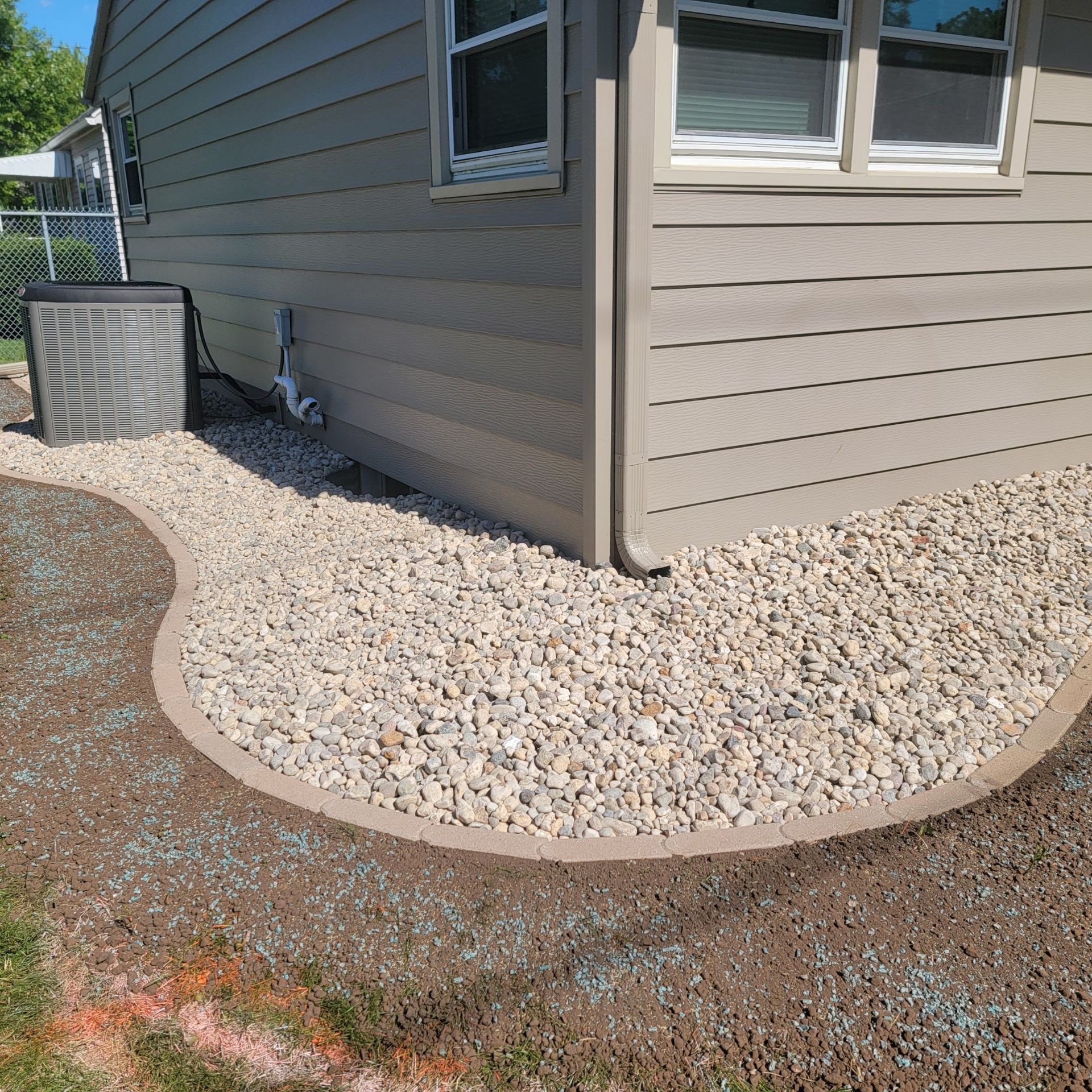
Rote’s offers waterproofing and drainage solutions in Janesville, WI, including grading, soil layering against foundations, window well replacement, and French drain solutions. That experience matters when a patio is being installed near a home because the hardscape has to work with the drainage plan—not against it.
Why Ground Prep Matters Before Brick or Paver Installation
A good patio is only as strong as what is underneath it. The base preparation determines whether the patio stays smooth and stable or starts to settle, shift, and hold water.
Proper groundwork usually includes:
- Removing unsuitable soil
- Creating the correct slope
- Installing a compacted base
- Adding bedding material
- Setting the pavers correctly
- Managing edges and transitions
- Planning where runoff will discharge
Skipping or rushing these steps is where problems begin. A patio can look great the day it is installed, but if the base is weak or the slope is wrong, Wisconsin weather will expose it fast.
If you are considering a new patio, start with Rote’s brick and paver patio services. The right installation should blend durability, drainage, and design from the beginning.
How Patios Tie Into Foundation Protection
A backyard patio near the house can either help protect the foundation or create a problem area.
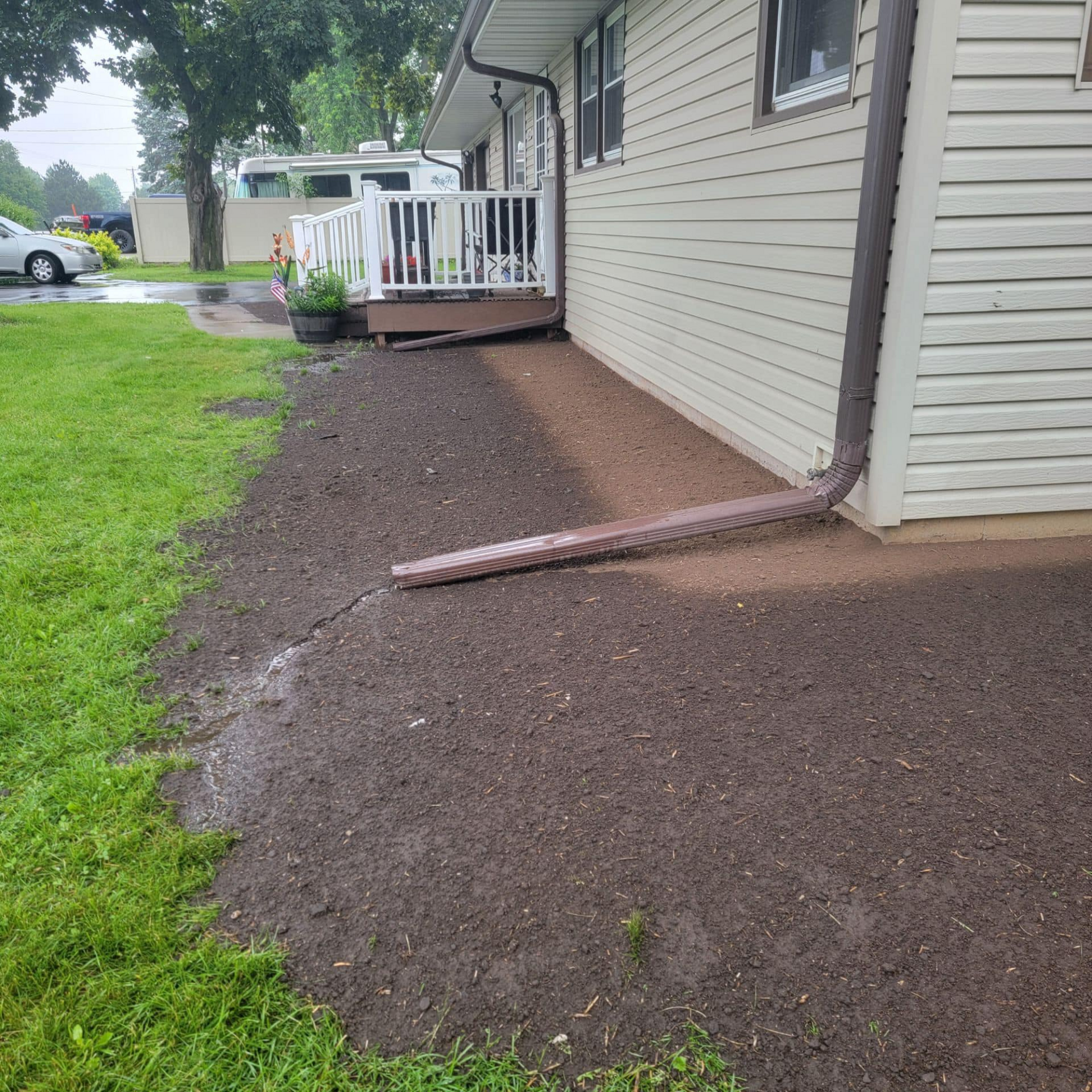
When properly graded, the patio helps move rainwater away from the structure. When installed poorly, it can trap water near the foundation, especially if the surrounding yard slopes back toward the home or if downspouts are dumping water onto the patio area.
This is where landscaping and waterproofing overlap.
Rote’s explains this connection in their guide on how landscaping affects foundation drainage. Soil height, slope, downspout discharge, and hardscape placement all affect how much water ends up near your home.
Before installing a patio, it is smart to look at:
- How water currently moves during a rainstorm
- Where downspouts discharge
- Whether the soil slopes toward or away from the home
- Whether nearby beds are holding water
- Whether the area needs grading before hardscaping begins
- Whether a French drain or other drainage solution is needed
This is not overthinking it. This is how you avoid paying twice—once for the patio, and again later to fix the water problem.
Does a Brick or Paver Patio Need Waterproofing?
The patio itself does not get “waterproofed” like a basement wall, but it absolutely needs water-conscious prep.
For most patios, the goal is not to block water completely. The goal is to manage water properly through slope, base material, drainage planning, and surrounding grade correction.
A well-planned patio should:
- Shed surface water correctly
- Avoid pooling after rain
- Reduce washout around edges
- Stay stable through freeze-thaw cycles
- Protect nearby landscaping
- Keep water moving away from the foundation
If the patio is being installed close to the house, near a basement wall, beside window wells, or at the bottom of a slope, then waterproofing strategy becomes even more important. In those situations, patio prep may need to be coordinated with broader grading and water runoff solutions.
Warning Signs Your Patio Area Has a Drainage Problem
Before adding a new patio—or replacing an old one—walk the area after a decent rain. Look for signs that water is already causing trouble.
Common red flags include:
- Standing water near the house
- Soft or sunken soil
- Mulch washing out of nearby beds
- Water collecting around steps or doors
- Basement dampness after storms
- Existing pavers that have settled or become uneven
- Grass that stays soggy long after the rest of the yard dries
- Soil pulling away from the foundation
If you see these issues, do not ignore them. A new patio will not magically fix bad drainage unless the project is designed to solve the drainage problem as part of the installation.
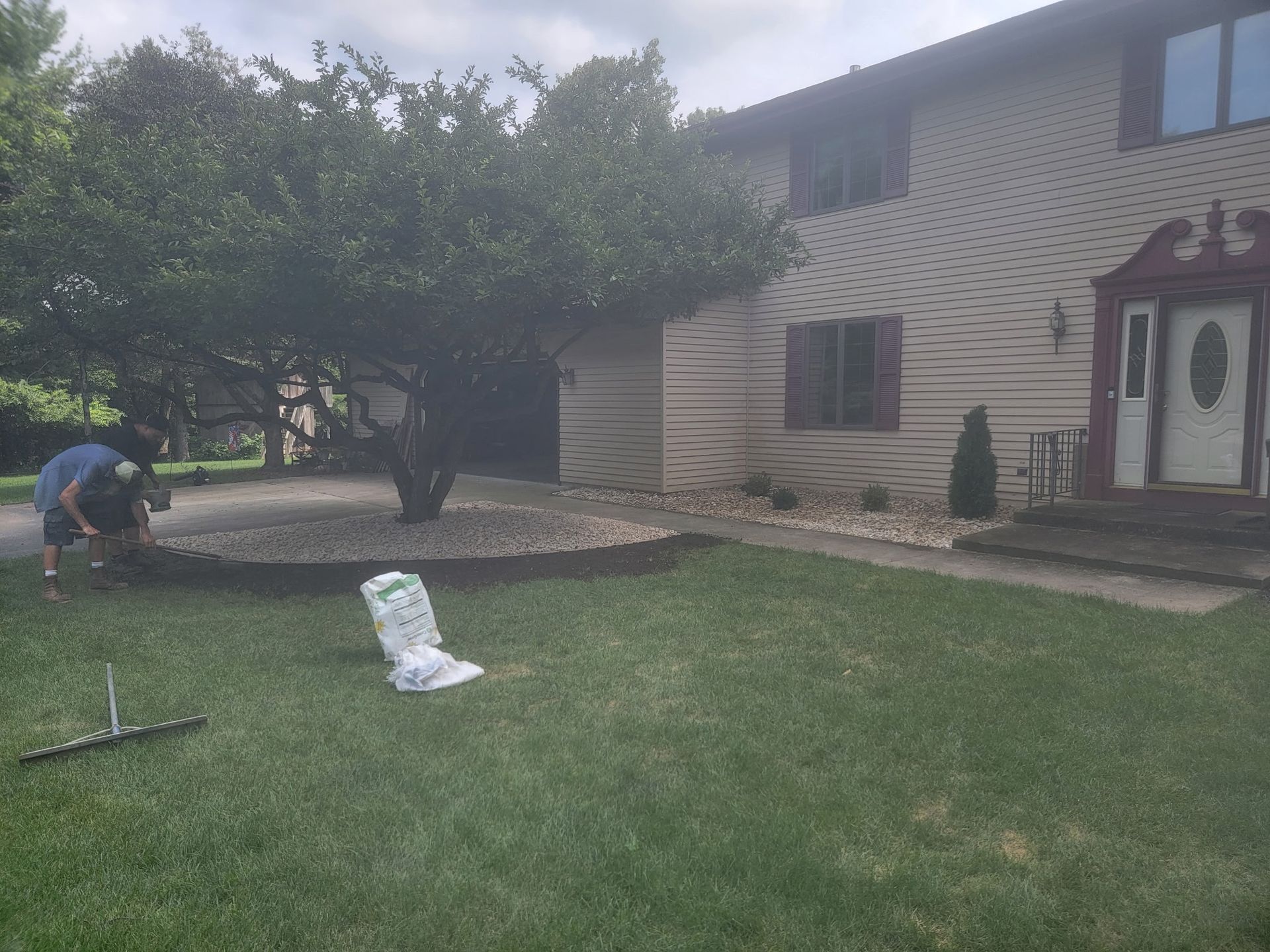
Patios, Retaining Walls, and Grading Often Work Together
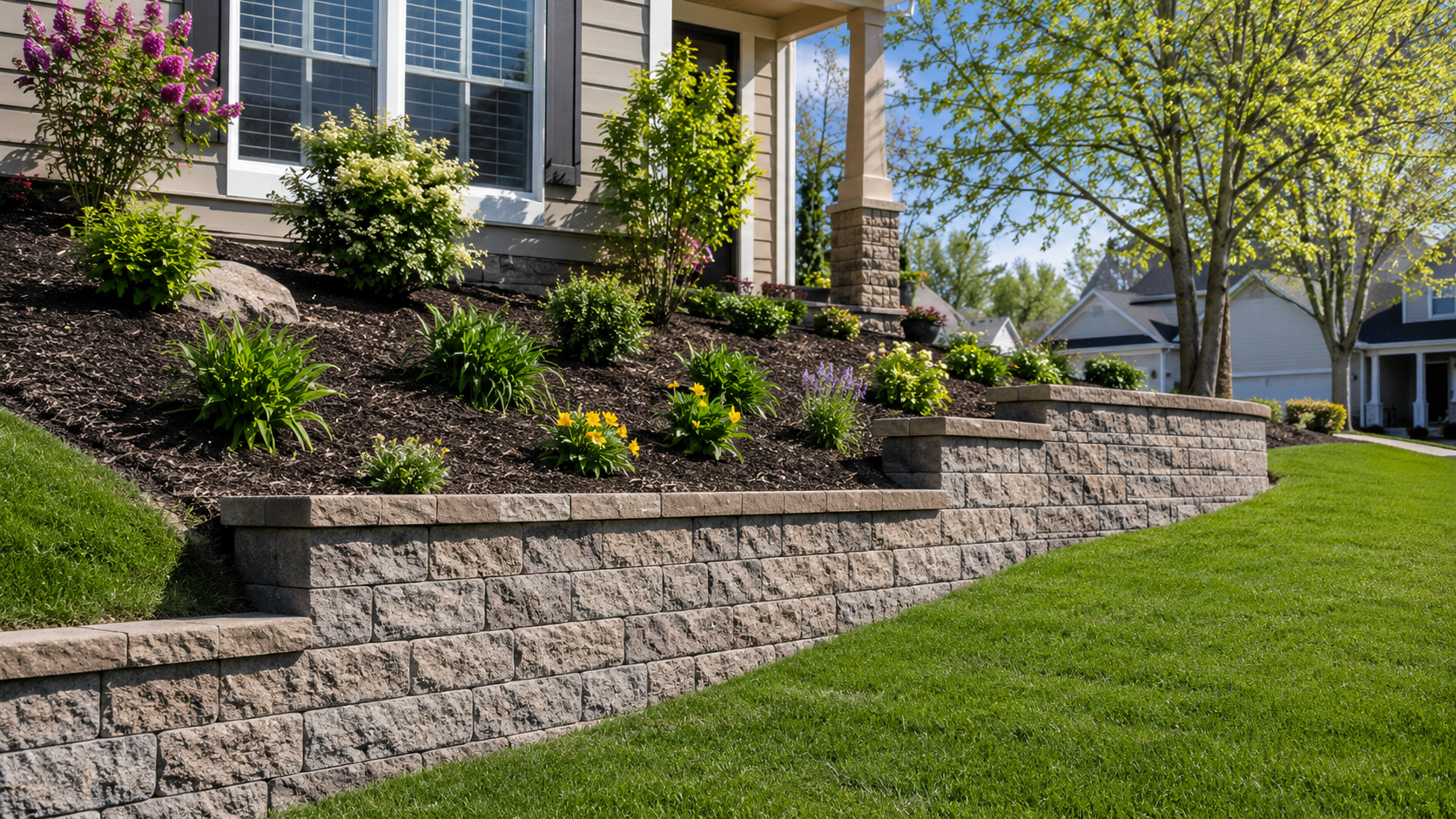
Some yards need more than a patio. If the site has a slope, runoff problem, or uneven grade, a retaining wall may be needed to create a stable outdoor living area.
A properly built wall can hold back soil, create a level patio zone, and help control erosion. This is especially useful in Janesville yards where spring rains can push soil and mulch downhill.
Rote’s retaining wall services can pair naturally with patio work when the yard needs structure before the patio surface goes in. Their recent blog on retaining walls for erosion control and curb appeal also explains why grading and drainage matter behind the wall—not just in front of it.
For many properties, the best layout is a complete system:
- Retaining wall to manage slope
- Patio to create usable outdoor space
- Grading to direct water away
- Curbing or edging to define beds
- Plantings to stabilize soil and soften the hardscape
That combination looks better and performs better.
Concrete Curbing Can Help Control Edges and Runoff
Patio edges are another area where water and maintenance problems show up. If edges are weak, water can wash out base material, mulch can spill onto the patio, and grass can creep into the hardscape.
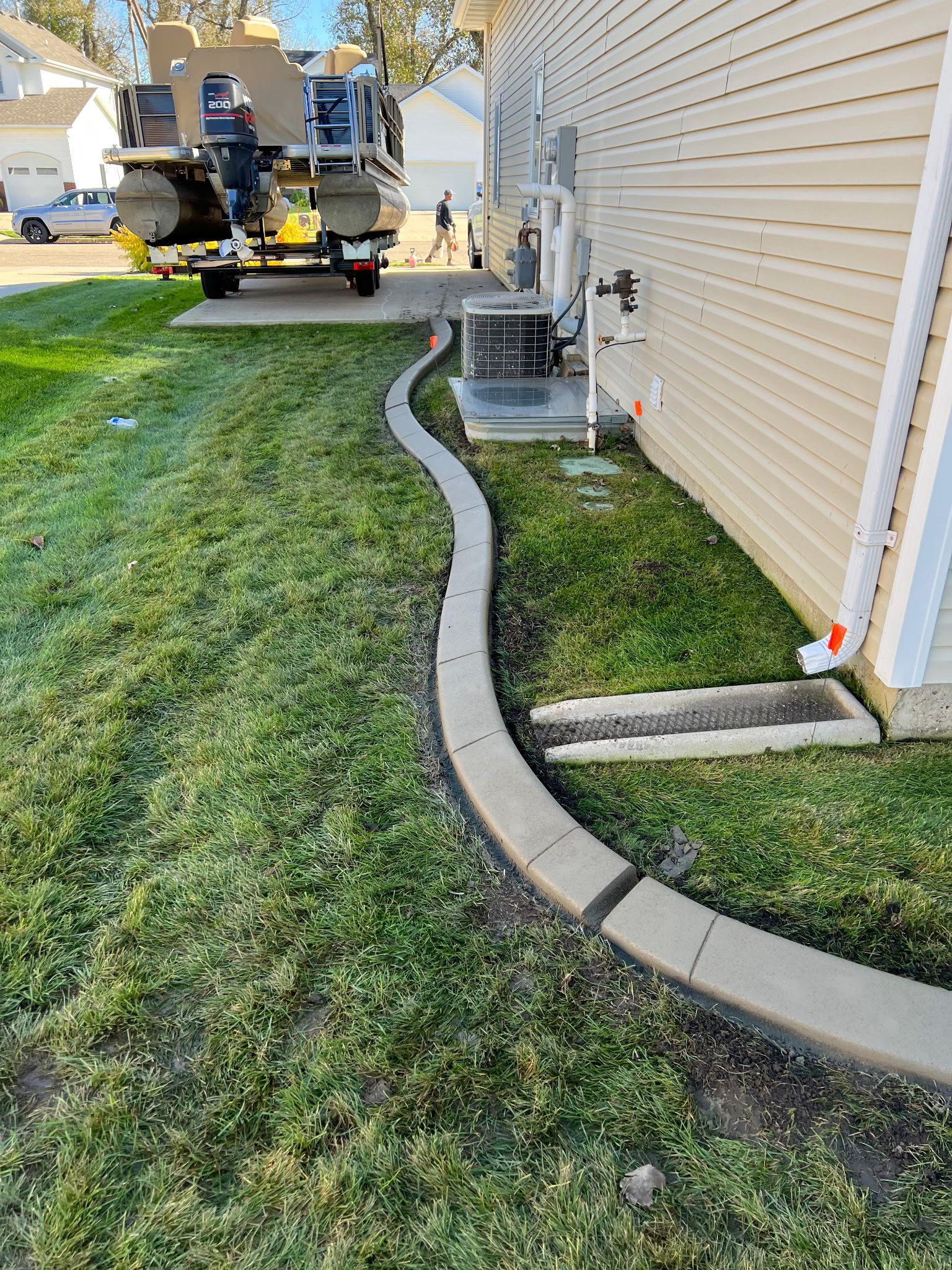
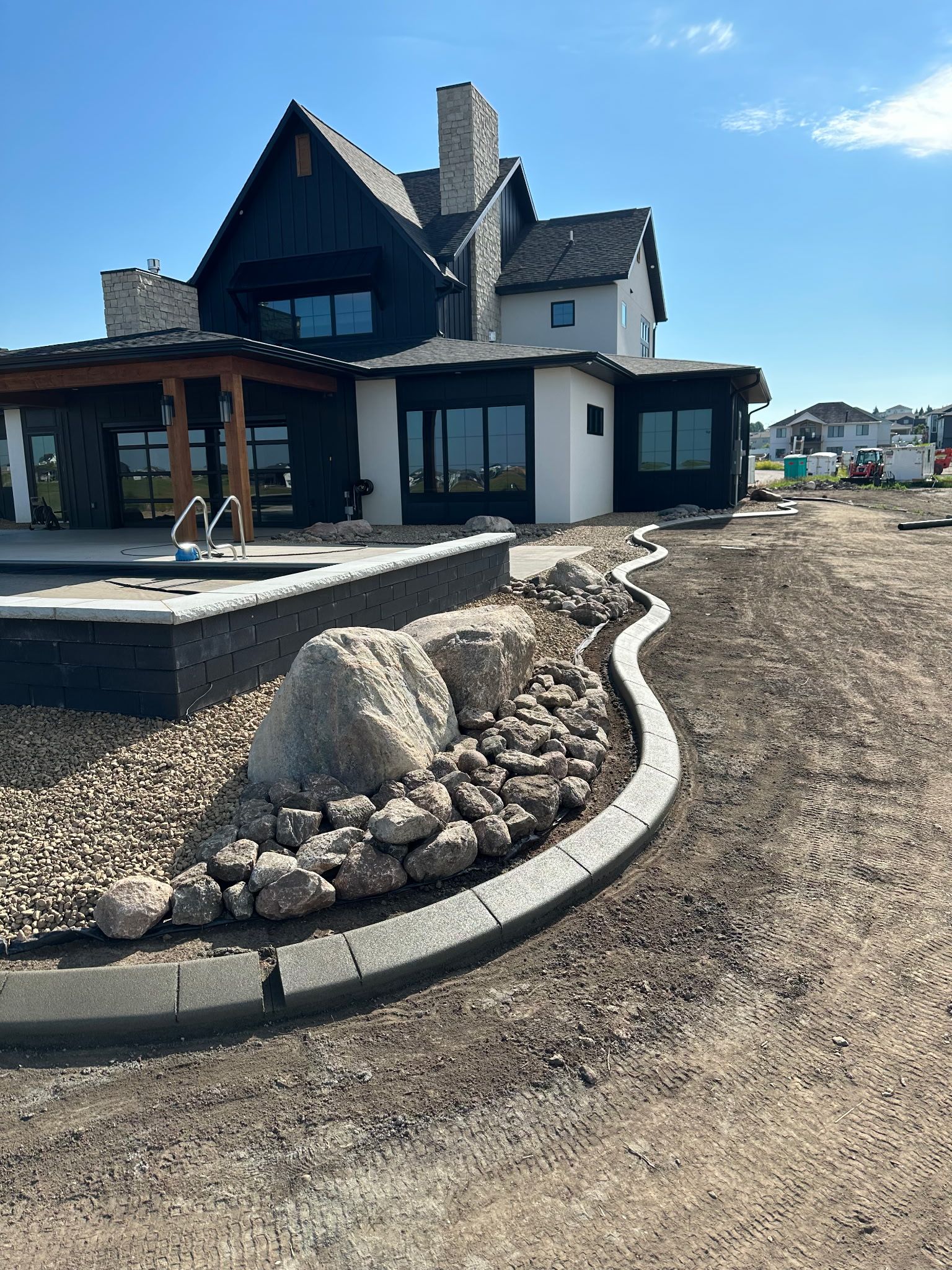
Concrete curbing helps create clean, durable borders around patios, beds, and landscape features. It is not a substitute for proper drainage, but it can support a cleaner, more controlled layout.
Rote’s Curb-Crete concrete curbing can be used to define planting areas, reduce maintenance, and create a more finished transition between patios, lawns, and landscape beds.
Their related blog, Curb-Crete Concrete Curbing: Add Definition and Reduce Maintenance, goes deeper into the benefits of concrete edging for homeowners who want sharper lines and less cleanup.
Do Not Forget the Landscape Beds Around the Patio
The patio surface gets the attention, but the surrounding beds play a major role in how the finished space performs.
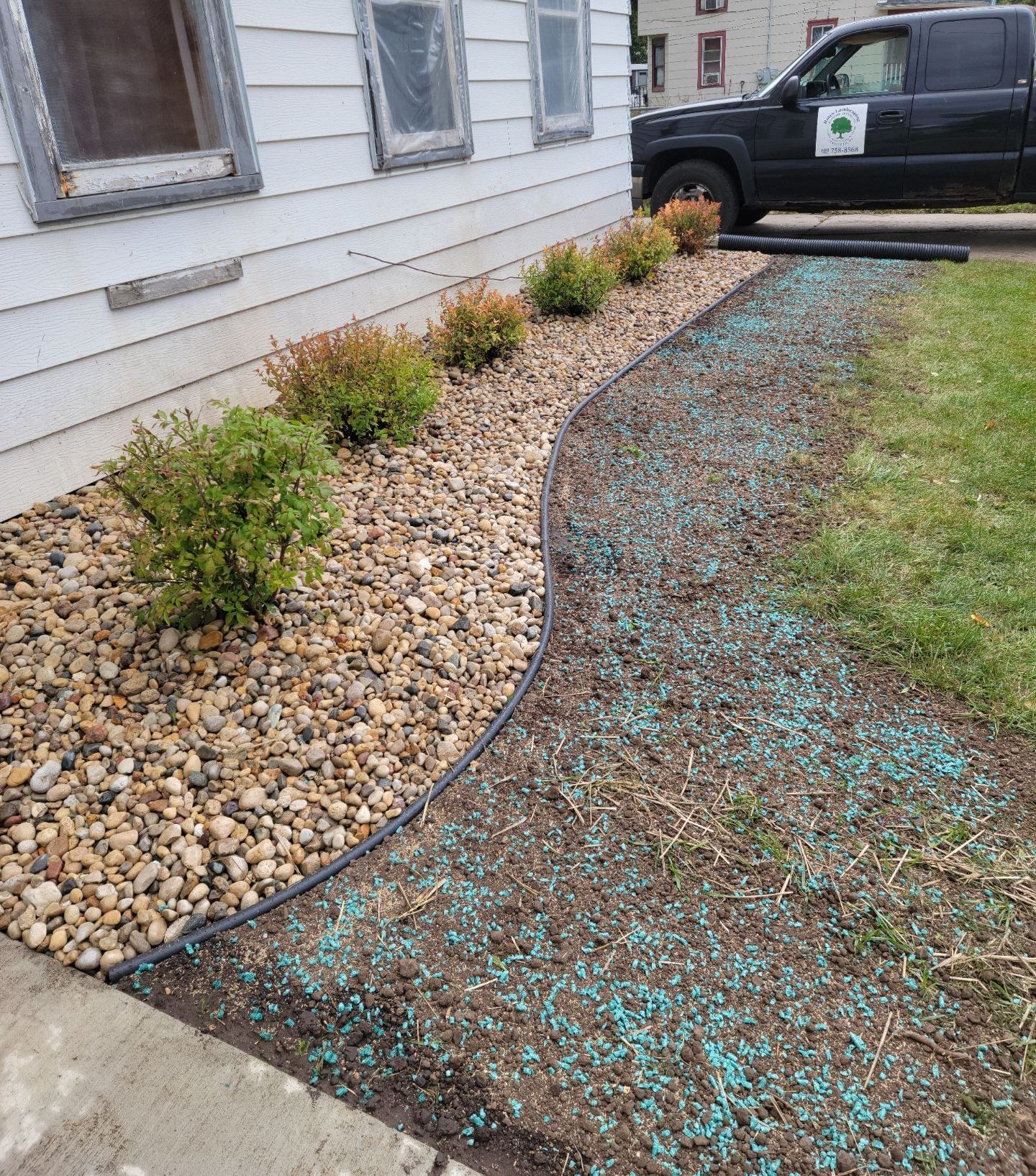
Poorly placed beds can hold water against the patio or foundation. Over-mulched beds can block drainage paths. Beds without clean edges can wash out during storms and make the patio look messy.
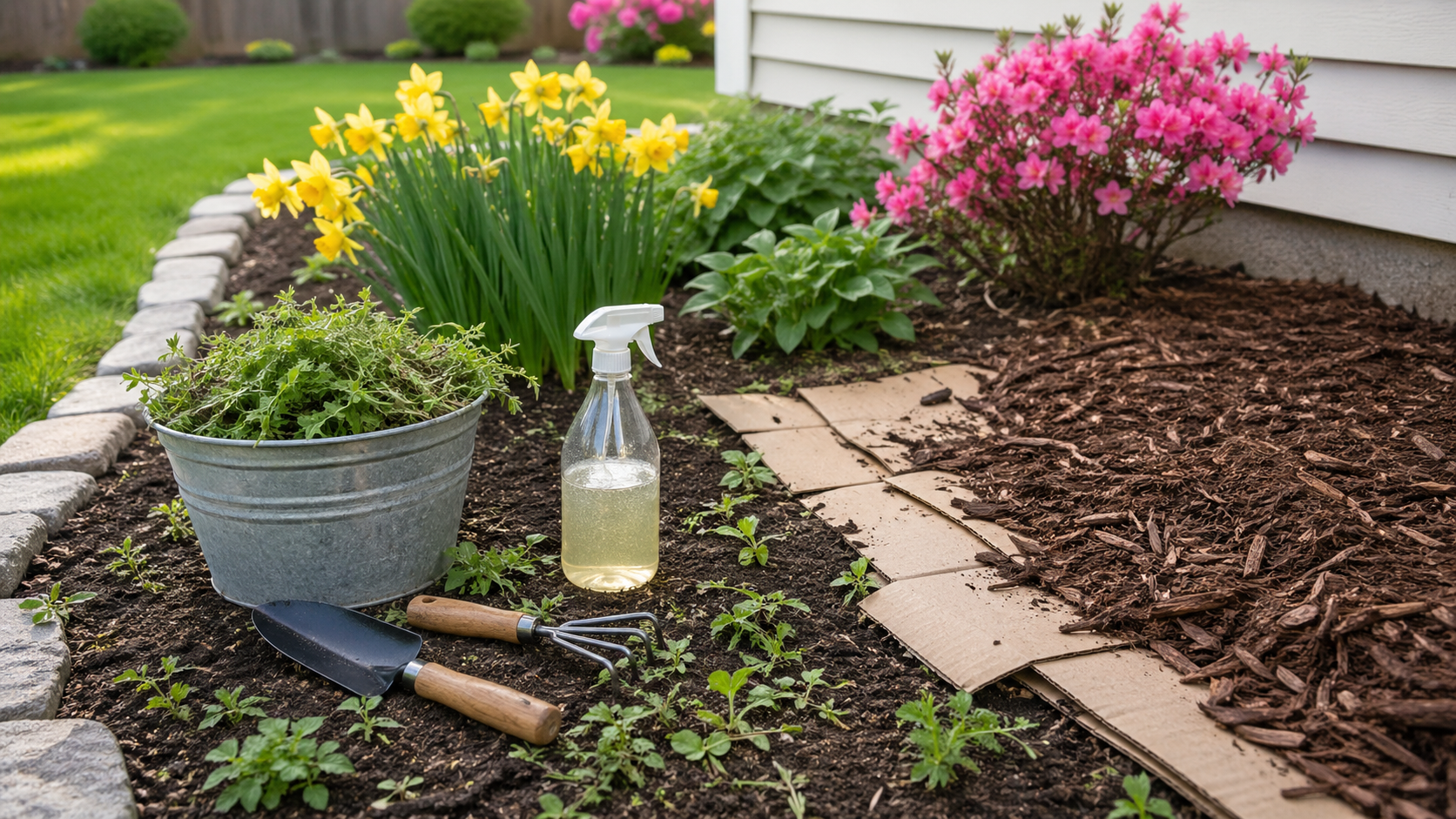
A better approach is to design the patio and planting areas together. Rote’s landscape beds and edging services can help create clean transitions, healthier planting zones, and a more polished outdoor space.
When beds are properly shaped, edged, and graded, they help the patio look intentional—not like a slab dropped into the yard.
What Homeowners Should Ask Before Building a Patio
Before starting a brick or paver patio project, ask these questions:
- Where will rainwater go?
- Does the patio need to slope away from the house?
- Are downspouts creating problems in this area?
- Is there existing erosion or washout nearby?
- Does the soil stay wet after storms?
- Will the patio connect to steps, doors, walkways, or retaining walls?
- Will landscape beds or curbing be added around it?
- Does the project need grading before installation?
If the contractor cannot answer these clearly, that is a problem. Patio work is hardscaping, but it is also water management.
Better Patios Start With Better Planning
A patio should be more than a pretty place to put chairs. It should be built into the yard in a way that supports drainage, protects the foundation, reduces erosion, and holds up through Wisconsin weather.
That is where Rote’s Landscaping & Waterproofing stands out. Their work connects the visual side of outdoor living with the practical side of grading, drainage, and waterproofing.
If you are planning a new patio in Janesville, WI, start with the groundwork. The right slope, base, drainage plan, and surrounding landscape design will help your patio look better and last longer.
To talk through patio design, grading, and water-management options, contact Rote’s Landscaping & Waterproofing for a local consultation.