Retaining Walls in Janesville, WI | Erosion Control & Curb Appeal
Stop erosion, level steep slopes, and upgrade curb appeal with engineered hardscaping—built on proper grading and drainage.
In Janesville and across Rock County, spring rain and freeze-thaw cycles don’t just “mess up the yard”—they move soil. If you’ve got a slope that’s washing out, a planting bed that won’t hold shape, or a low area that stays wet, you’re seeing a symptom of one core problem: water is taking the easiest path downhill.
A well-built retaining wall changes the rules. It holds back soil, reshapes unusable slopes into functional spaces, and—when paired with correct grading—protects your landscape and your foundation from water-related damage.
This May guide breaks down how retaining walls work, where they make the most sense locally, and why grading expertise matters as much as the wall itself.
If you want the service overview first, start here:
Retaining Walls in Janesville, WI
Why May is the right month to address retaining wall and erosion issues
May is when problem areas become obvious:
- Spring storms expose washouts and soil loss
- Saturated ground reveals soft spots and settling
- Slopes show rills (small channels) where runoff is carving paths
- Beds and mulch start migrating into lawns and sidewalks
The earlier you correct it, the less you’ll spend re-mulching, re-planting, and repairing damage all summer.
What a retaining wall actually does (and what it should never do)
A retaining wall is meant to resist lateral soil pressure and control grade changes—turning a slope into stable tiers, level lawn panels, raised beds, or hardscape terraces.
But a wall should not be asked to solve water problems on its own.
The truth:
If water is trapped behind a wall, hydrostatic pressure builds, and that’s when walls:
- bow outward
- crack or separate
- heave and sink
- fail prematurely
That’s why proper drainage and grading are non-negotiable.
The two-part formula: retaining wall + grading
If you’re serious about durability, you don’t just “install a wall.” You manage water and soil movement.
Rote’s approach ties hardscaping to water management—because your yard and your foundation are connected.
Helpful background reading:
- How Landscaping Affects Your Foundation: Drainage Best Practices
- Waterproofing & Basement Drainage Solutions in Janesville, WI
- Two-Pronged Waterproofing: Grading + Concrete Curbing Explained
A retaining wall should be part of a larger plan that controls where water goes—especially around the home.
Where retaining walls make the biggest difference in Janesville yards
Retaining walls aren’t just decorative. In this region, they’re often the most practical way to reclaim space and prevent recurring maintenance headaches.
Erosion control on slopes
If you see exposed roots, thinning turf, or runoff channels, a wall can:
- stabilize the slope
- reduce soil loss
- create terraced planting zones that hold mulch and plants in place
Leveling uneven yards
A wall lets you convert a sloped or awkward yard into usable areas:
- flatter lawn space for kids/pets
- a level spot for a patio or firepit area
- raised garden beds that drain properly
Looking to turn that new level space into an outdoor hangout?
Brick & Paver Patios
Protecting landscaping near the foundation
If soil is slumping toward (or away from) the home, grading + wall work can help:
- prevent water pooling near the foundation
- keep soil at the correct height
- reduce washout that exposes basement walls
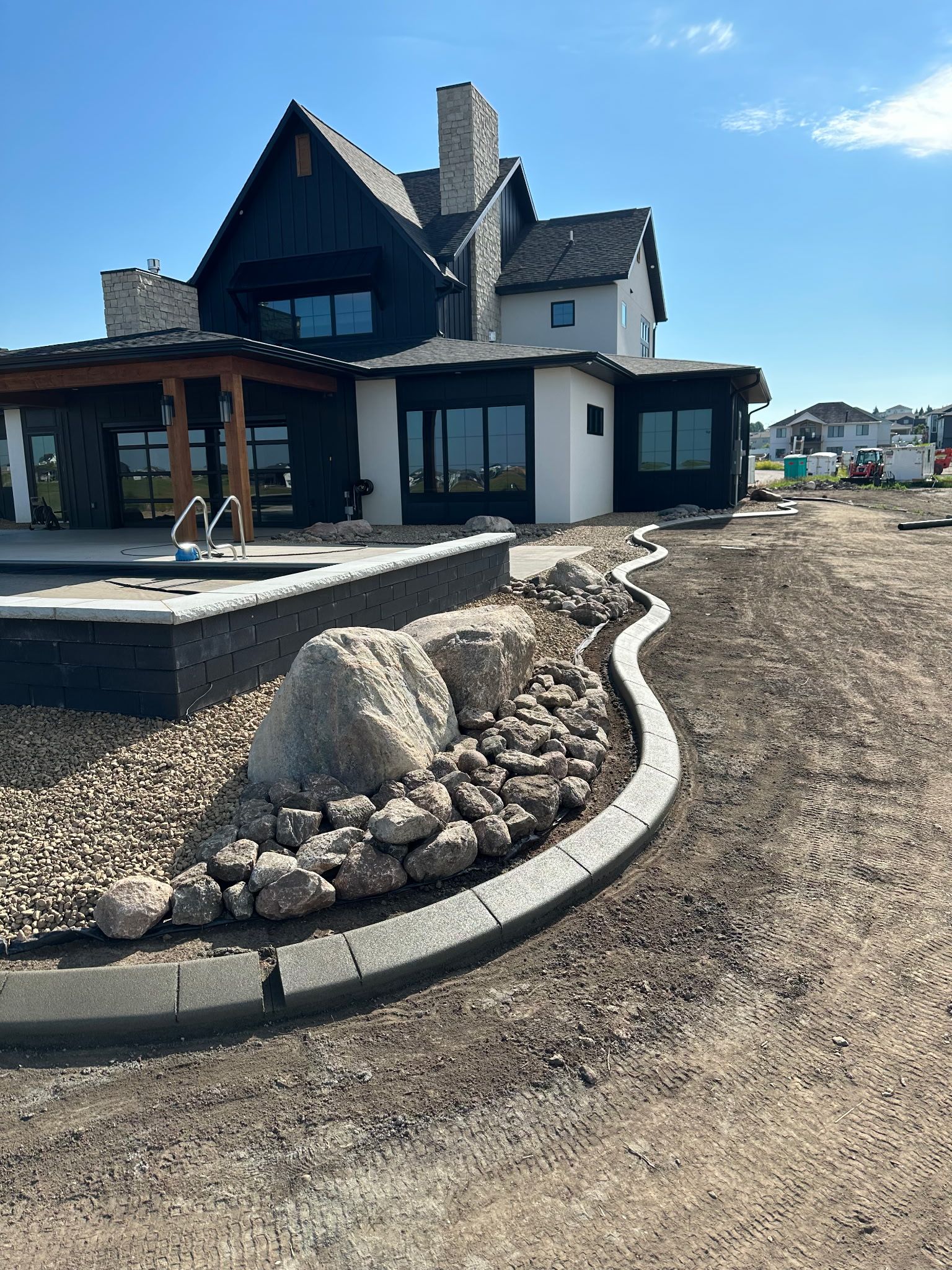
Boosting curb appeal with structure
A well-designed wall is a visual upgrade:
- clean lines
- defined beds
- upscale, “built-in” look
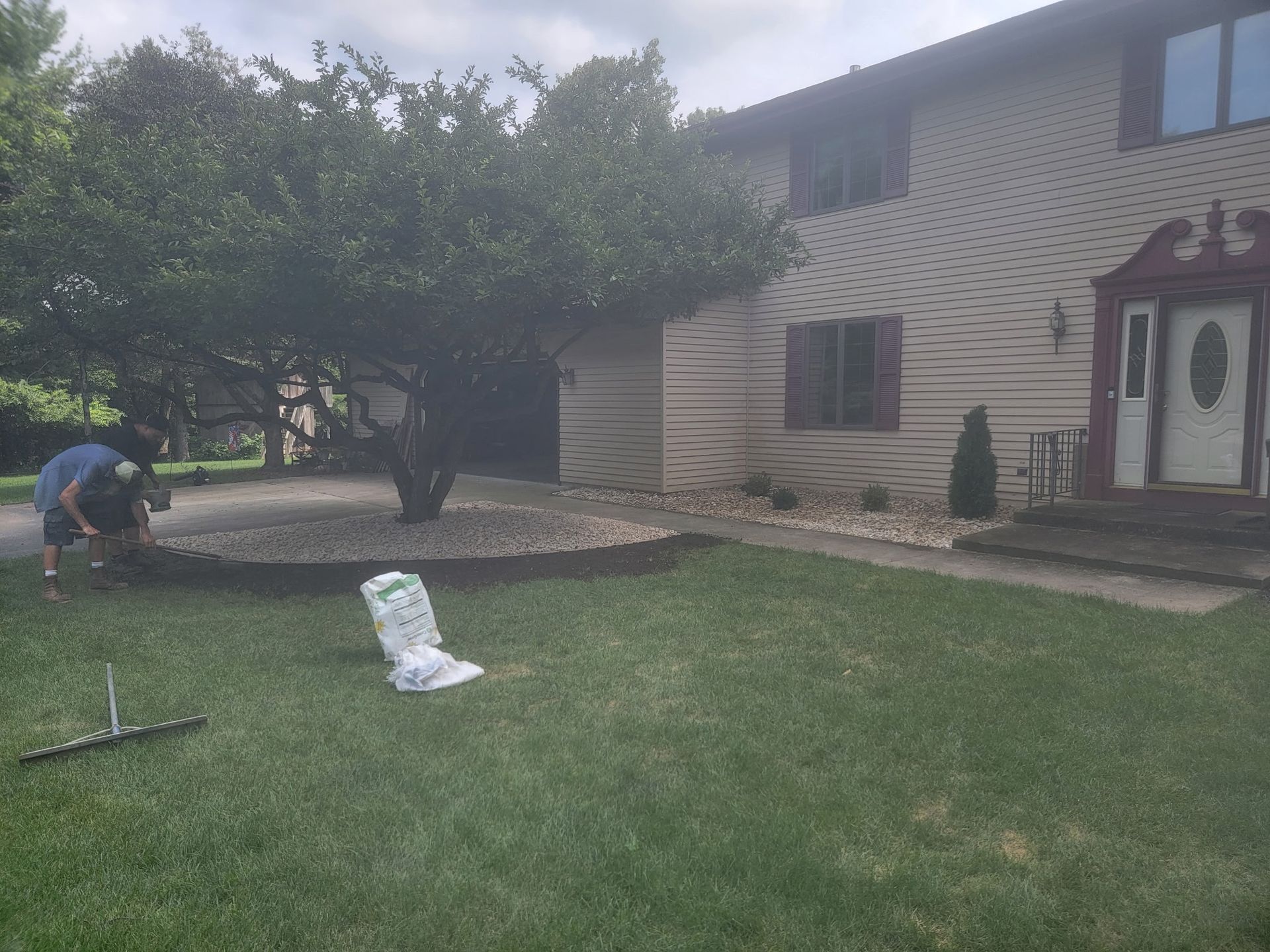
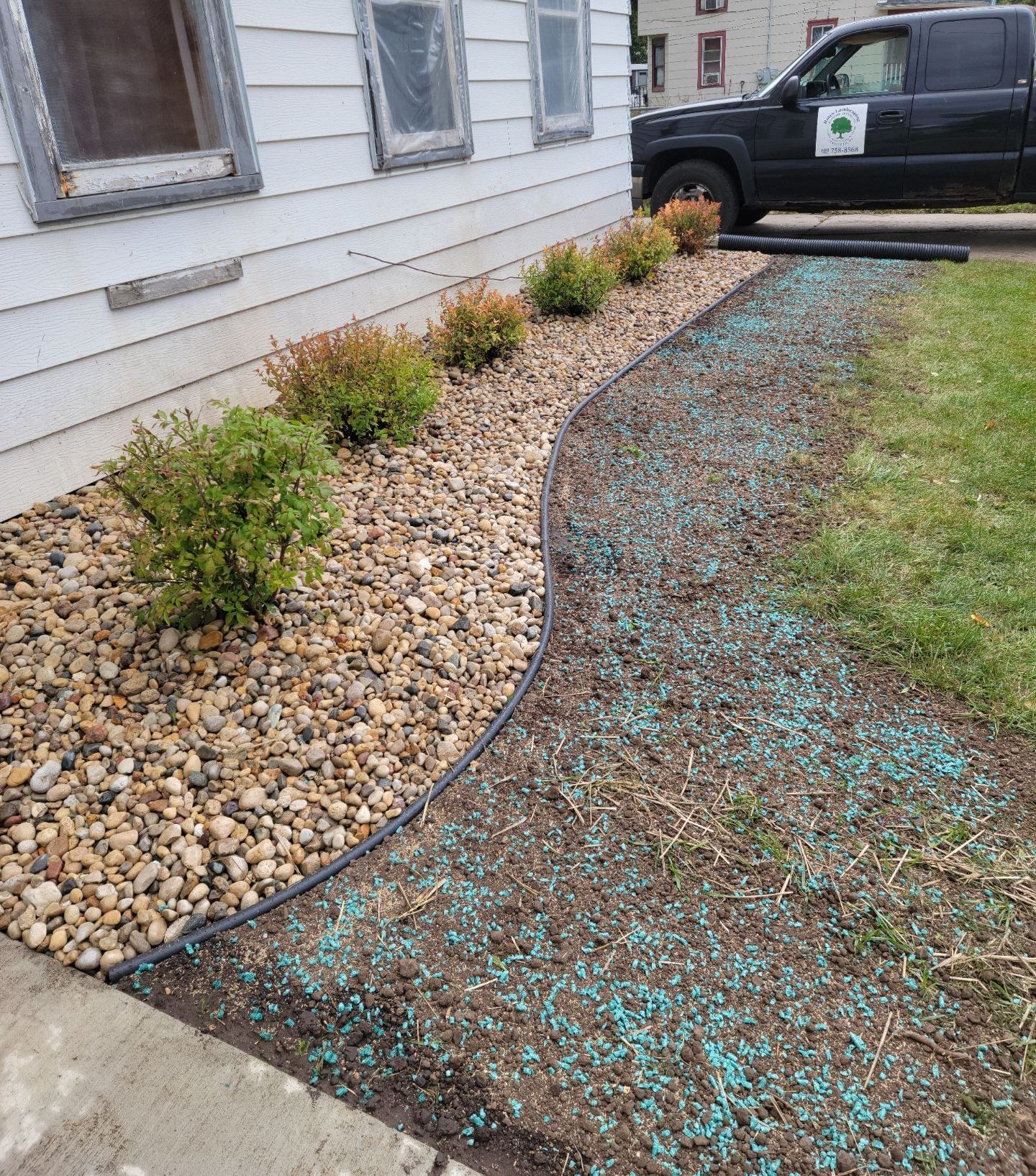
Pairing walls with crisp bed design elevates the whole property:
Landscape Beds & Edging
Material and style options: function first, then looks
The best retaining wall is the one that fits your site conditions and goals.
Common wall styles include:
- Segmental block walls (versatile, clean look, great for most residential applications)
- Natural stone (high-end appearance, strong visual impact)
- Boulder walls (natural and rugged—often great for larger slopes)
The right choice depends on:
- slope height and soil conditions
- drainage requirements
- the look of the home and existing hardscape
- what you want the space to do (hold soil, create a terrace, frame a patio, etc.)
For local examples, browse:
Projects Gallery
Signs you need a retaining wall (or your current one needs help)
Be direct with yourself—these don’t fix themselves:
- soil washing onto sidewalks/driveways after rain
- mulch disappearing every storm
- a slope that you can’t mow safely
- pooling water at the bottom of a hill
- wall blocks shifting, leaning, or bulging
- cracks, gaps, or separation in an existing wall
If a wall is moving, the issue is usually base prep + drainage + grading, not “bad luck.”
Add-ons that make retaining walls perform better and look sharper
A retaining wall is often the backbone of a broader landscape upgrade.
Smart pairings:
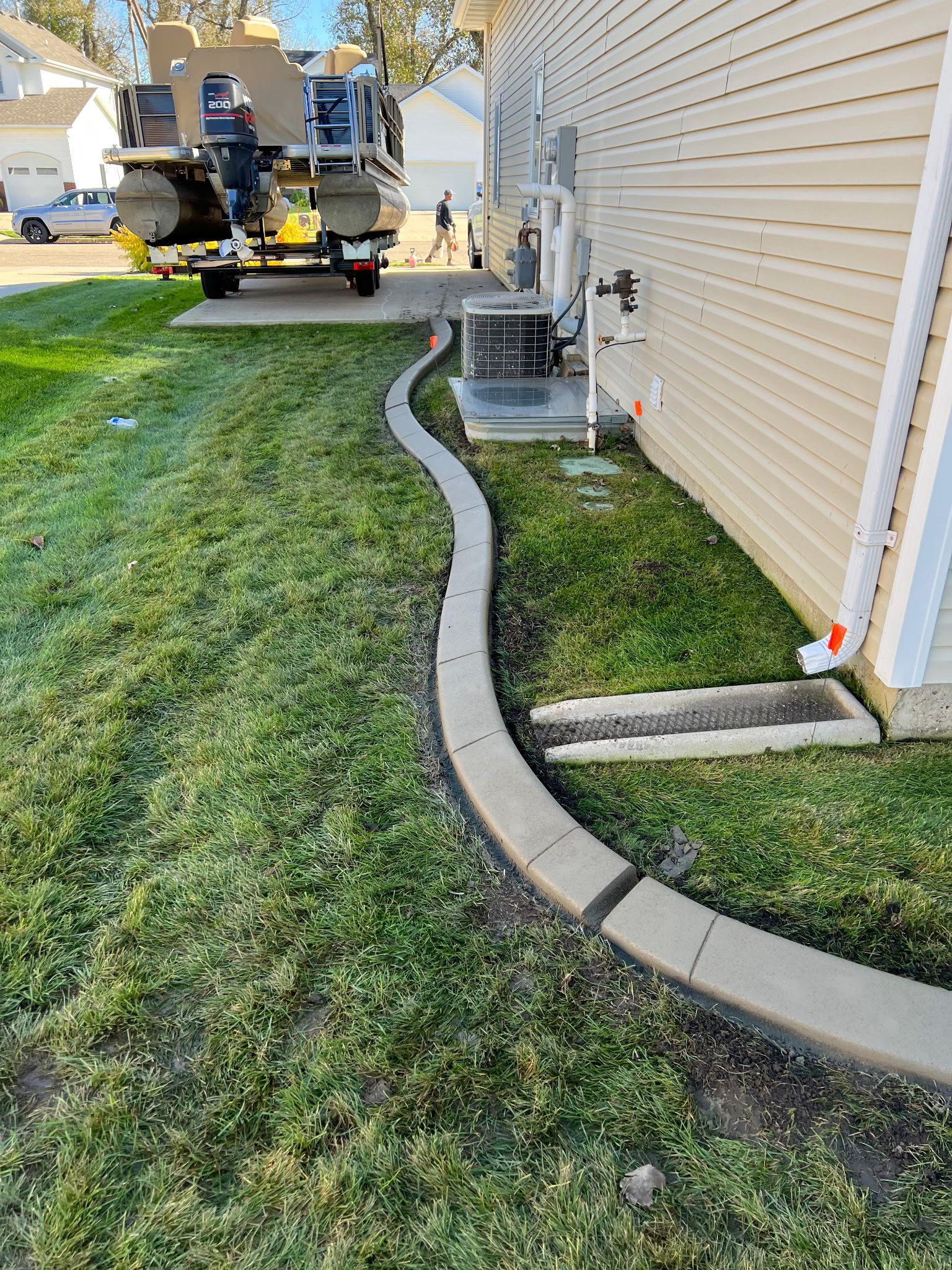
- Concrete curbing to lock in bed edges and reduce mulch spill:
Concrete Curbing (Curb-Crete) in Janesville, WI - refreshed bed layouts for a finished look:
Landscape Beds & Edging - patios and walkways that turn terraces into usable living space:
Brick & Paver Patios
Retaining walls aren’t just hardscaping—they’re risk management
A retaining wall that’s built with proper grading and drainage does more than improve the yard:
- reduces erosion and soil loss
- protects investment plantings
- improves drainage patterns
- lowers the chance of water issues near the home
- upgrades curb appeal and property value
If you’re in Janesville, WI and want a retaining wall that looks clean and holds up through Wisconsin seasons, the planning matters as much as the materials.
Start here to discuss options and get a site-specific recommendation:
Contact Rote’s Landscaping & Waterproofing