The Living Boundary: Why Your Next Fence Should Be Alive
Transforming Janesville Backyards with Native Privacy Screens, Sound Buffers, and Habitat-First Design
At Rote’s Landscaping & Waterproofing, we believe a boundary should do more than just mark a property line—it should breathe, bloom, and build value. While a traditional wood or vinyl fence offers an instant "wall," it often comes with maintenance headaches, wind-load issues, and a "boxed-in" feel.
In 2026, more Janesville homeowners are choosing Living Privacy. By strategically using native trees and shrubs, you can create a secluded oasis that blocks prying eyes, muffles street noise, and manages water runoff—all while looking like a natural extension of the Wisconsin landscape.
Native Plant Recommendations for Zone 5
To build a living wall that thrives in our local climate, we recommend a "layered" approach. This ensures your privacy stays intact even when the leaves drop.
The Evergreen Backbone (Year-Round Coverage)
- 'Techny' Arborvitae: A Wisconsin classic. It’s more cold-hardy and wind-resistant than the common 'Emerald Green,' making it perfect for our open Janesville lots.
- Black Hills Spruce: Dense, blue-green needles and a compact growth habit make this an excellent windbreak and sight-blocker.
- Star Power™ Juniper: A locally bred powerhouse that stays upright and thick without needing constant shearing.
The Seasonal Showstoppers (Color & Texture)
- Common Ninebark: Known for its arching branches and peeling bark, this shrub offers thick foliage in shades ranging from deep burgundy to lime green.
- Red-Twig Dogwood: Once the leaves fall, these bright red stems pop against the white Wisconsin snow, providing architectural interest all winter.
- Serviceberry (Juneberry): A multi-stemmed small tree that provides white spring blooms, delicious summer berries for birds, and a stunning orange-red fall display.
Case Study: The "Rolling Hills" Seclusion Project
Location: Near Palmer Park, Janesville, WI
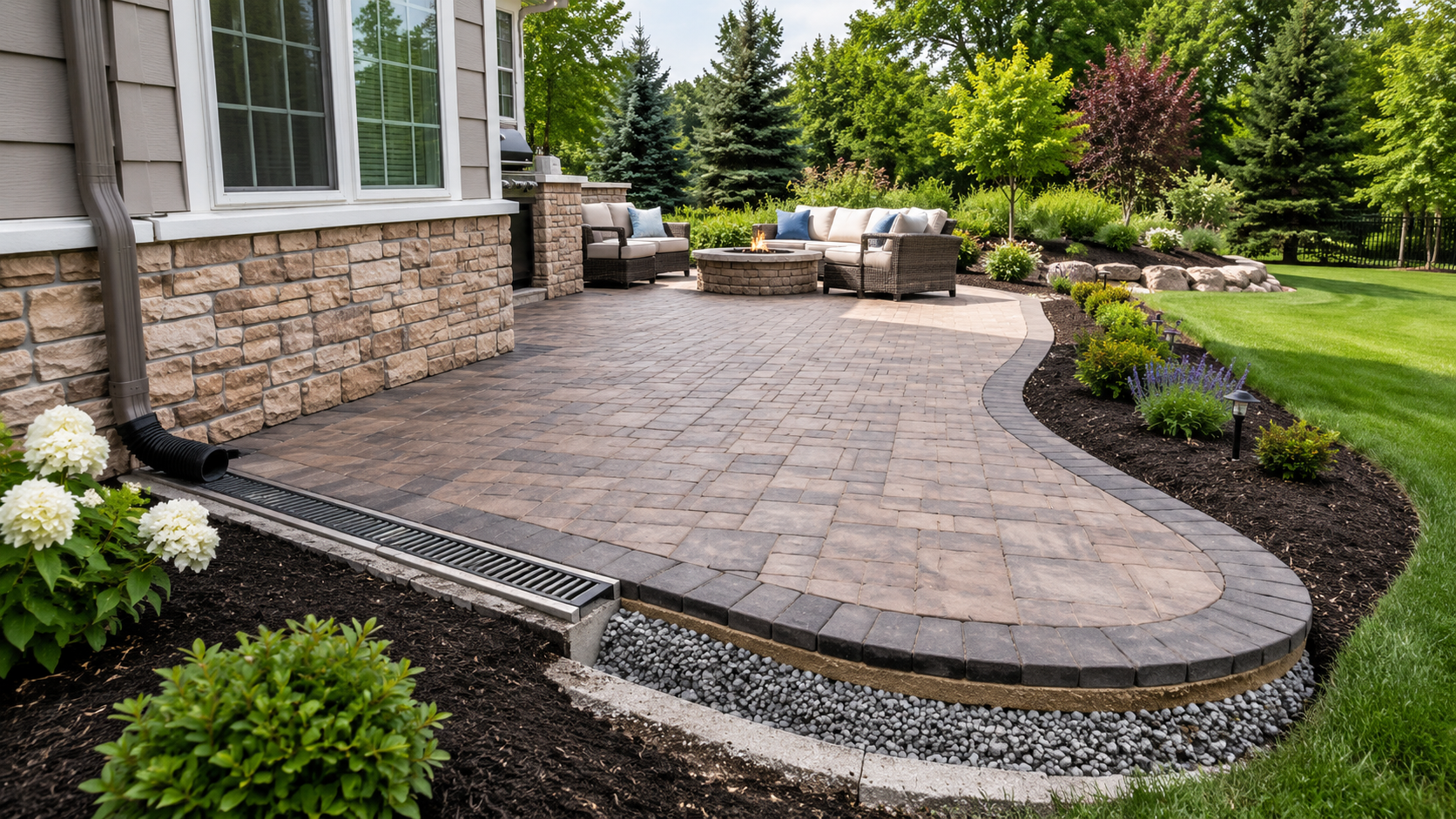
The Challenge: A homeowner had a beautiful new patio but felt "on display" to a busy neighboring sidewalk. They wanted privacy but didn't want to lose the open feel of their yard with a 6-foot wooden "fortress."
Our Solution: Instead of a fence, we installed a staggered living screen.
- The Lower Layer: We used a mix of Little Bluestem (native grass) and Gray Dogwood to create a 4-foot soft buffer that feels airy but provides a clear boundary.
- The Upper Layer: We planted three White Pines at the corner of the lot to block the direct line of sight from the neighbor’s second-story window.
- The Result: Within two seasons, the homeowner had a private "outdoor room." The plants acted as a natural sound muffler for the nearby traffic, and because we used native species, the maintenance was limited to an annual spring pruning.
The Benefits of Growing Your Privacy
Choosing plants over panels offers several long-term advantages that a standard fence simply can't match. First, there is the longevity and value aspect. While a wood fence begins to rot and lose value the moment it’s installed, a living screen actually increases in value and effectiveness as the plants mature and grow denser.
Furthermore, living boundaries are superior for noise and wind control. Hard surfaces like vinyl or wood reflect sound waves, often causing noise to bounce back into your yard. Leaves and branches, however, absorb and diffuse sound. These plants also act as natural wind filters, slowing down those harsh Wisconsin gusts rather than acting like a sail that could lean or blow over.
Finally, there is the ecological impact. A living fence turns a dead space into a habitat for local pollinators and birds, creating a vibrant, moving landscape that changes beautifully with the seasons.
Waterproofing Bonus: The Drainage Benefit
One of the unique advantages of working with Rote’s is our expertise in water management. Traditional fences can often trap water against their base, leading to rot or pooling.
In contrast, a living fence helps manage your yard's "footprint." Large shrubs and trees act as natural pumps, absorbing excess groundwater through their deep root systems. If your yard has a slope that contributes to basement dampness, we can design your privacy screen as part of a bioswale or rain garden, solving two problems with one beautiful installation.
Ready to grow your privacy? Would you like us to visit your property for a free consultation to see which native plants would work best for your specific soil and sun conditions?